30 March-3 april 2025, Yichang, hubei, China
Fish passage 2025
Connectivity and processes across the riverscape
It is a pleasure to welcome you to the 2025 International Conference on Eco-Hydrology and River Connectivity (Fish Passage 2025). Fish Passage 2025 will be held from March 30th to April 3rd, 2025 at China Three Gorges University (CTGU) in Yichang, Hubei Province, China. The theme of the conference is “Ecohydrology and River Connectivity”. The conference is held every 1-2 years and has brought together experts, managers, stakeholders and companies worldwide with concurrent sessions in engineering, biology, and management and social issues.
The Fish Passage 2025 will feature concurrent sessions in biology, hydraulics, engineering and related topics. In addition, it will offer a series of short-courses and tours as part of the program. The conference will also include plenary talks, professional networking opportunities, and a poster session.
Watch this space for frequent updates and further information related to the conference.
The conference will start on Sunday with selected workshops on thematics linked to fish passage areas targeting students and young professionals.
Details on the abstract submission and other information to prepare for your trip are available on the main conference website!
We are looking forward to welcoming you to Yichang and Three Gorges University!
Keynote Speakers – Fish Passage 2025

I am Full Professor in Civil Engineering Department at Centro Federal de Educação Tecnológica de Minas Gerais (Brazil) since 2007. My research focuses on ecohydraulic issues in neotropical freshwater system, acting on fish passages models (numerical and scale models); fish swimming capability (voluntary and non-voluntary tests); river models (2D and 3D numerical models) and fish habitat suitability. In the latest years, I was particularly interested in turbulence effects on fish movement around hydraulic structures.Title: Turbulence effects on fish movement around hydraulic structures. The main content of my report: 1.The role of hydrodynamic in fish swimming 2.Turbulence definition and monitoring 3.Experiments in real hydraulic structures in tropical areas 4.Environmental impacts due to turbulence effects and possible mitigation solution 5.The base for computational tools that preview fish movements
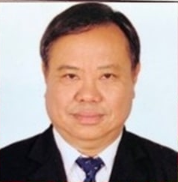
Dr Oudom Phongkhampheng, Research Manager FishTech Project, National University of Laos In 2007, the National University of Laos in collaboration with Australian research and funding partners, started a research programe to develop fishway design criteria based on Mekong floodplain fish species swimming abilities and behavior. The work initially focused on low-head irrigation and floodgate structures and was based on short-sections of fishway models tested in the field. This led to the construction of a full-scale fishway at Pak Peung in 2010, which was assessed and found to be suitable for use on floodplains in Lao PDR. Further work on downstream passage, passage at high dams and assessment of the benefits of providing fish passage continued through to 2018. Since 2018 to the present, the work of the research team has concentrated on broadening stakeholder involvement, developing fishway design processes and building demonstrations fishways to promote local uptake. The project has been very successful, with orgainsation such as the World Bank, Asian Development Bank, Governments of Aistralia, the Netherlands and Japan funding fishways demonstration sites, along with the expansion of the work into Cambodia, Vietnam, Thailand, Myanmar and Indonesia.
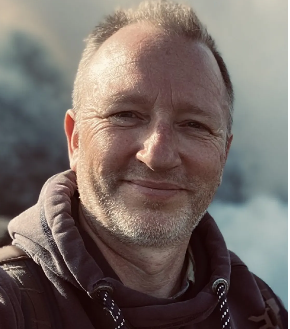
Paul Kemp is a Professor of Ecological Engineering at the University of Southampton. His research relates to understanding the complex systems linked to integrated natural resource management, particularly in relation to marine and freshwater fisheries, and how shocks can influence those systems. Specific applications relate to how understanding of the behavioural ecology of fish can help solve challenges in sustainable water and energy engineering, particularly on how the physical environment influences the behaviour and physiological performance of fish, and how manipulation of that environment by engineering means can be used to mitigate for negative impacts of water and energy resource development.
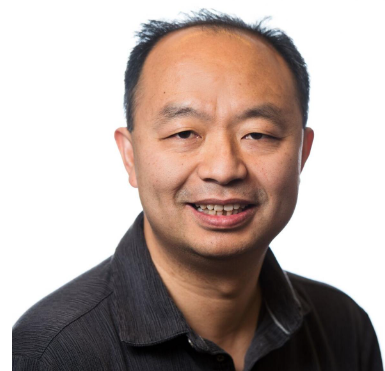
Title: Advancements in Sensor Technology for Assessing Hydropower Structures and Predicting Fish Injuries: Enhancing Fish Monitoring and Behavior Understanding Abstract:I will present recent advancements in sensor technology for characterizing the physical conditions of hydropower structures and predicting fish injuries in a cost-effective manner. Additionally, I will discuss techniques for improving fish movement and health monitoring in aquatic environments. By integrating fish behavior with physical measurements of hydropower structures and studying fish species and life stages that have never been studied before, we can enhance our understanding of fish migration, behavior, habitat use, fishway effectiveness, and survival at hydropower facilities. These insights can lead to better-informed management decisions for both existing and new hydropower structures, facilitating designs that minimize environmental impacts.
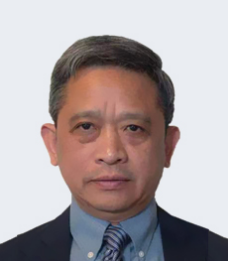
Chang Jianbo, Ph.D., is a professor in fish ecology and conservation biology research, leading the Institute of Hydeoecology of the School of Water Resources and Hydropower Engineering at Wuhan University. He was once a fundamental and 1st – 2nd board member of the World Sturgeon Conservation Society (WSCS) and the International Society for River Science (ISRS). He is recently a board member of the Ecological Society of China (ESC), a board member of the Chinese National Committee on Large Dams (CHINCOLD), and the Chairperson of the Committee of Fish Passage Facilities of CHINCOLD. He had been the chief scientist of both the major program of the National Natural Science Foundation of China and the National Basic Research Program of China, coordinating research on human impact on river ecosystems and endangered species conservation. He is recently the chief scientist of a National Key Research and Development Program of China focusing on restoring fish passages all along the main channel of the Yangtze River.
Call for AWARD NOMINATIONS
The nomination forms for the Fish Passage Career Achievement Award and the Distinguished Project Award for the 2025 cycle are now closed.
The Career Achievement Award recognizes the efforts of an influential professional whose contributions to the field of fish passage have enhanced fisheries resources.
The Distinguished Project Award is intended for projects that use innovation and technical excellence to achieve ecological gain for fish passage, river connectivity and improved habitat for endangered and native species. An ideal project for the award would be one that exemplifies success and inspires greater application of fish passage restoration. It does not need to be a newly implemented project, in fact, projects that have had enough time to demonstrate effectiveness will more likely meet the evaluation criteria and have the highest chance of being selected. Projects that have been shared widely in professional papers or conference presentations are encouraged. Self-nomination is encouraged.
Go to the awards page to find out more or to nominate a person or project for an award.